Lightweight Strength with Precision Resin Infusion Technology
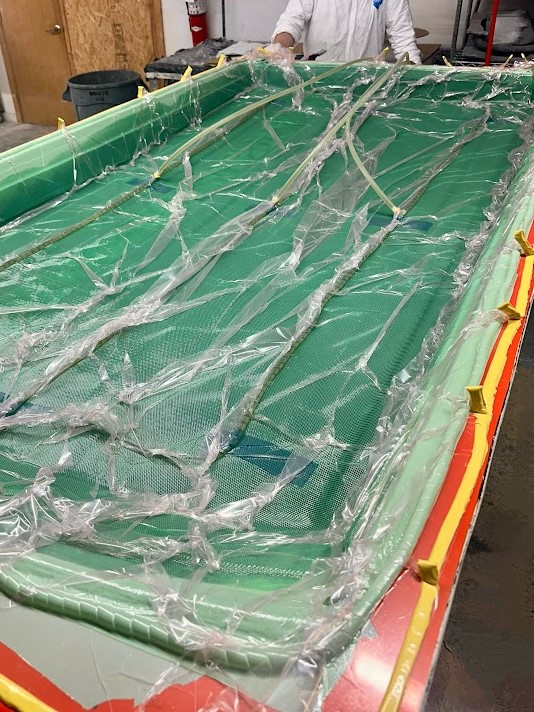
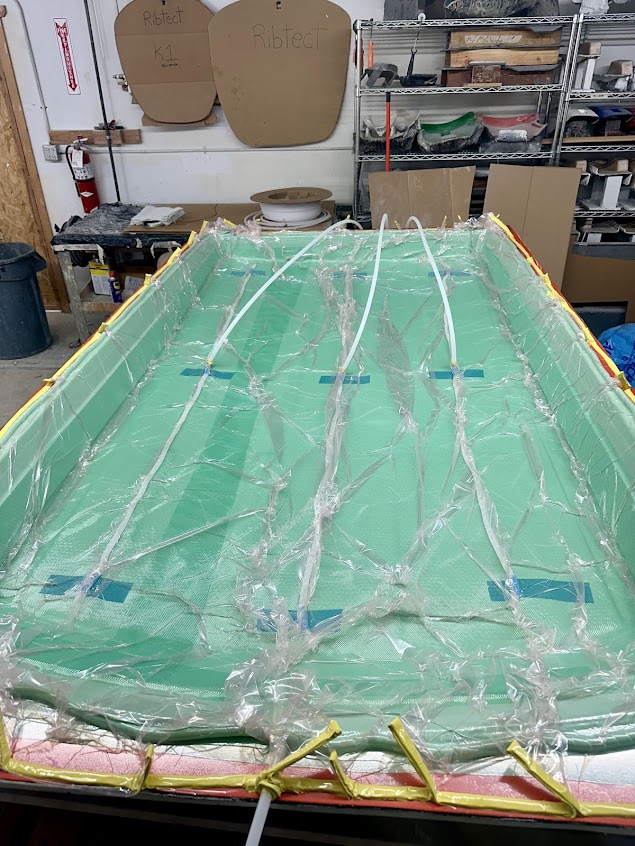
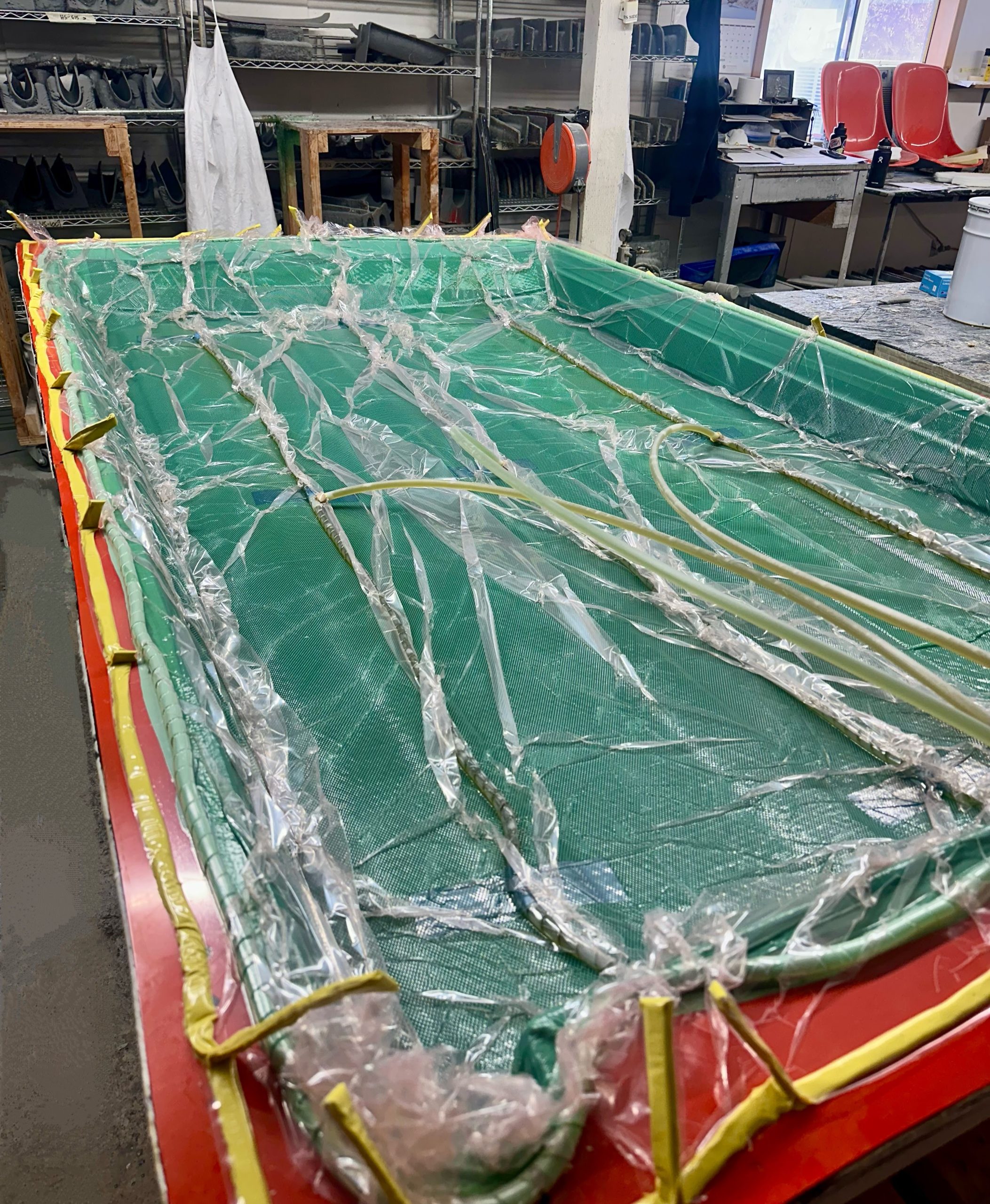
Our infusion process produces high integrity composite parts with minimal voids, built for structural performance and consistent quality.


High-Fiber, Lightweight Parts Through Advanced Resin Infusion
What Is It
How It’s Used
Benefits
Exceptional Strength and Weight Efficiency
Resin infusion allows for parts with a high fiber volume and minimal porosity, which directly improves structural performance while keeping weight low. This efficient fiber-to-resin ratio results in composites that deliver superior strength and stiffness without excess material. Lightweight components are essential for industries like aerospace and transportation, where every ounce matters. By optimizing fiber content and reducing voids, infusion parts achieve excellent mechanical properties that meet demanding specifications while helping clients reduce overall product weight and improve fuel efficiency or handling.
Clean and Environmentally Friendly
The closed-mold infusion method drastically reduces emissions of volatile organic compounds and airborne particulates compared to open mold techniques. This containment creates a safer workplace for operators and reduces environmental impact. By minimizing resin waste and excess exposure, the process supports sustainability goals while improving indoor air quality. Our infusion setups align with modern environmental standards and client commitments to greener manufacturing, helping companies reduce their carbon footprint and comply with regulatory requirements.
Advanced Process Control
Our infusion systems feature mobile infusion stations, multi-zone vacuum controls, in-mold sensors, and precision resin mixing equipment. These technologies enable us to manage complex parts and large-scale components with high accuracy. Multi-zone vacuum ensures even resin distribution, while in-mold sensors provide real-time feedback on cure progress. This process control allows for tight quality assurance, reduces cycle time, and ensures parts are manufactured to exacting specifications, even in demanding or variable production conditions.
Reliable and Repeatable Results
The resin infusion process ensures uniform resin flow and saturation across the entire laminate, producing consistent quality in every part. This repeatability is critical for industries requiring certified components where variability can lead to failure or rejection. Our controlled infusion environment minimizes human error and material waste while providing precise control over resin content and cure cycles. This reliability enables manufacturers to confidently scale production, knowing each part meets strict performance and safety standards.
Tailored Performance
We collaborate closely with clients to optimize fiber orientation, fabric choices, and resin flow paths specific to each application. This customization allows us to target structural demands and cosmetic appearance precisely, whether for load-bearing aerospace parts or smooth, high-gloss consumer components. By adjusting reinforcement layouts and infusion parameters, we create composites that meet or exceed desired mechanical, thermal, and aesthetic performance criteria, ensuring parts function exactly as required in their final environment.
Supports Seamless and Large Designs
Infusion enables the fabrication of large, joint-free composite parts that improve mechanical integrity and visual appeal. Eliminating seams and fasteners reduces stress concentrations and potential failure points, resulting in stronger, more reliable components. Additionally, smooth, uninterrupted surfaces enhance appearance and reduce finishing costs. This capability is valuable in applications such as automotive body panels, boat hulls, or architectural elements where aesthetics and structural continuity are critical.
Compatible with Hybrid Materials
Our infusion process can integrate multiple reinforcement types or core materials within a single component. This flexibility allows us to optimize specific areas for stiffness, flexibility, or weight reduction. For example, carbon fiber reinforcements can be combined with fiberglass or core materials in targeted zones to enhance performance while managing costs. This hybrid approach enables bespoke solutions tailored to complex engineering challenges, delivering parts that meet diverse functional requirements within one seamless manufacturing operation.
Why We Use It
Photo Gallery