Clean Finishes and Repeatable Results with Closed Mold Precision
The light RTM method offers smooth surfaces and consistent quality, making it perfect for parts that demand visual appeal and streamlined production.


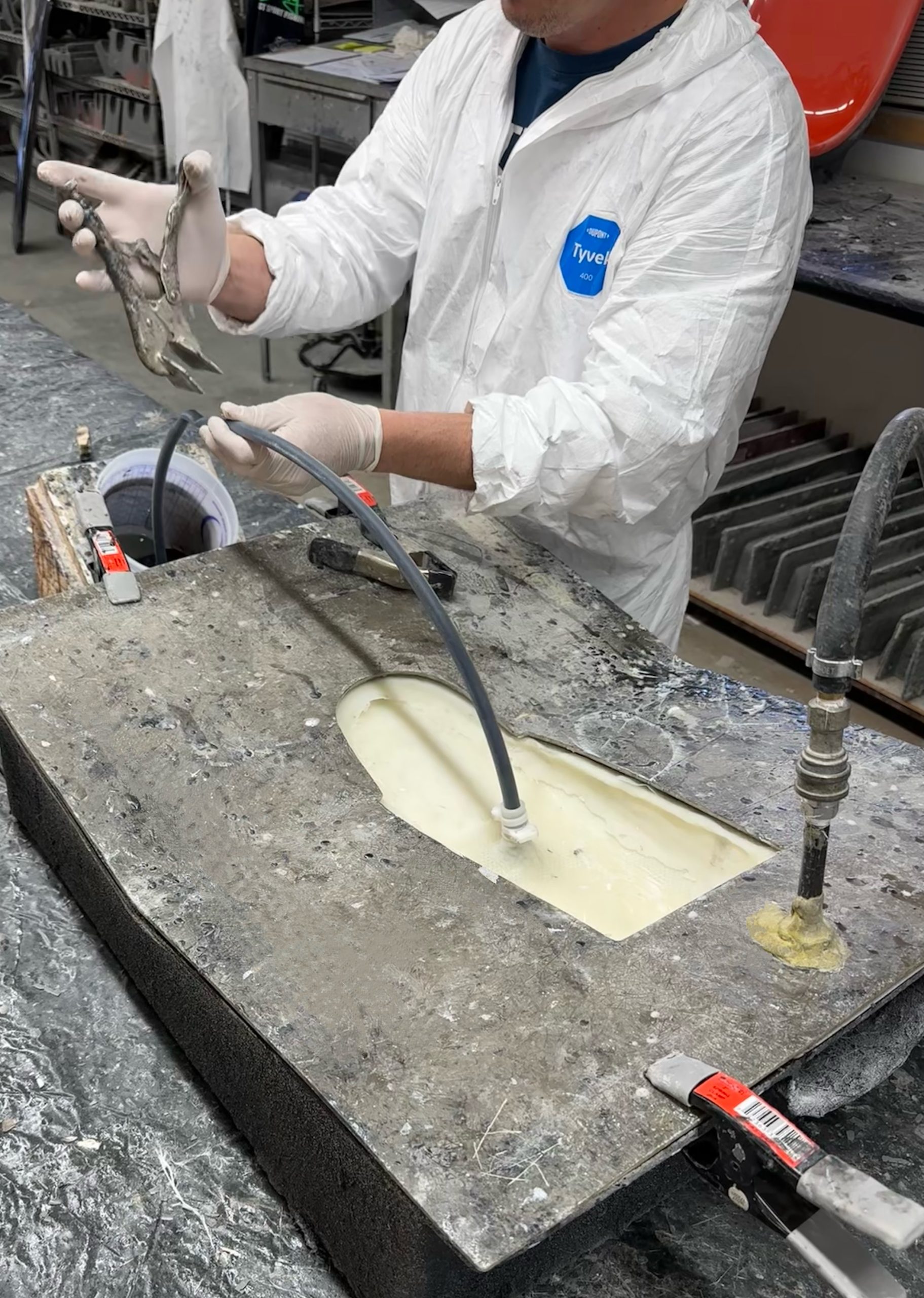
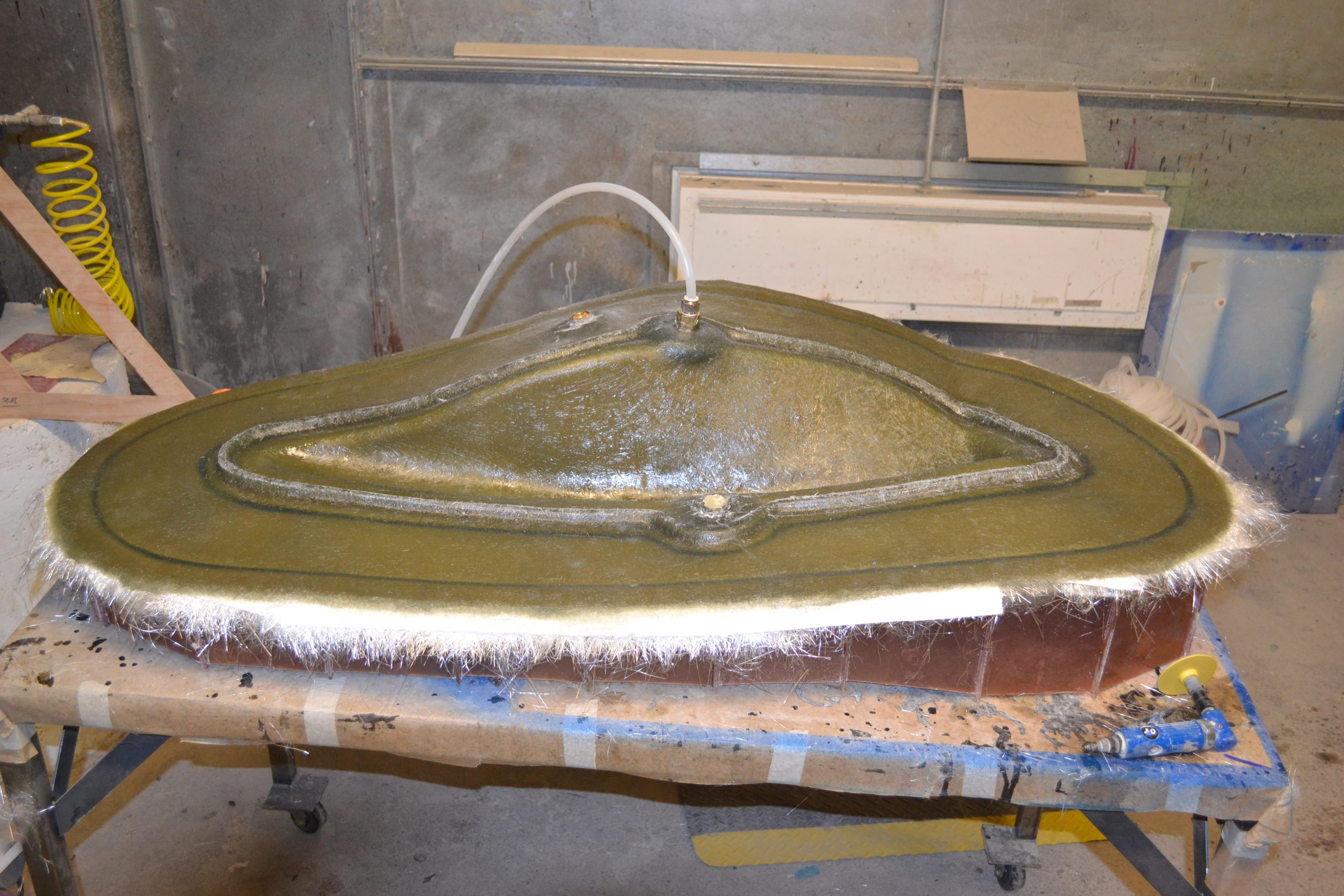
Closed-Mold Quality with Scalable Composite Production
What Is It
How It’s Used
Benefits
Superior Surface Quality
Light RTM produces composite parts with class-A surface finishes on both sides of the mold. This process significantly reduces or eliminates the need for sanding, painting, or other surface refinishing steps after molding. The resulting parts have a smooth, visually appealing finish that meets the demanding standards of industries requiring high aesthetic quality. This capability helps manufacturers save time and costs while delivering products that are ready for final assembly or customer use immediately after production.
Cleaner and More Sustainable
Light RTM’s closed-mold process dramatically reduces emissions of volatile organic compounds compared to open molding techniques. This containment not only creates a safer and cleaner work environment but also helps manufacturers meet increasingly strict environmental regulations. The process uses materials more efficiently and generates less waste. By adopting Light RTM, companies can align their operations with sustainability goals, reducing their environmental footprint while maintaining high-quality composite production.
High-Performance Properties
The Light RTM process enables precise control over resin content and mold temperature, resulting in strong, low-porosity laminates ideal for structural applications. Optimized vacuum pressure enhances resin distribution and fiber wet-out, delivering composite parts with excellent mechanical properties. These high-performance laminates provide the strength, stiffness, and durability demanded in aerospace, automotive, and industrial markets. The resulting parts withstand rigorous service conditions, helping manufacturers meet performance standards and customer expectations.
Scalable Production
The Light RTM process supports scalable manufacturing through the use of multi-cavity molds and interchangeable inserts. This flexibility enables efficient production from small pilot runs to high-volume outputs without sacrificing quality or consistency. The adaptability of tooling and process parameters allows manufacturers to respond quickly to changing demand and product variations. M&W Fiberglass leverages this capability to help clients scale production economically while maintaining tight tolerances and superior part quality.
Repeatability and Accuracy
This process delivers precise, consistent parts with tight dimensional tolerances. Light RTM is especially suited for applications where uniformity across production runs is critical, such as in aerospace, automotive, or industrial equipment. By controlling the resin flow, temperature, and vacuum pressure, M&W ensures every part matches design specifications closely. This high level of repeatability reduces waste and improves reliability, supporting clients’ quality assurance goals and allowing confident scaling from prototype to full production.
Lower Finishing and Labor Costs
Because Light RTM parts come out of the mold with clean edges and smooth surfaces, secondary finishing steps such as trimming, sanding, or painting are minimized. This translates to lower labor requirements and reduced production times. Consistent part quality reduces the need for rework and quality control interventions, streamlining the manufacturing workflow. Ultimately, clients benefit from lower overall production costs and faster time to market while maintaining the high standards required for performance and appearance.
Integrated Features
Light RTM allows for the embedding of inserts, fasteners, and core materials directly during the molding cycle. This integration streamlines assembly processes and reduces the number of secondary operations required after molding. By incorporating these features upfront, parts gain improved functionality and reduced overall weight. The ability to embed components during manufacturing helps simplify supply chains and improves product consistency, making it easier for clients to deliver complex, ready-to-install composite parts.
Why We Use It
Photo Gallery