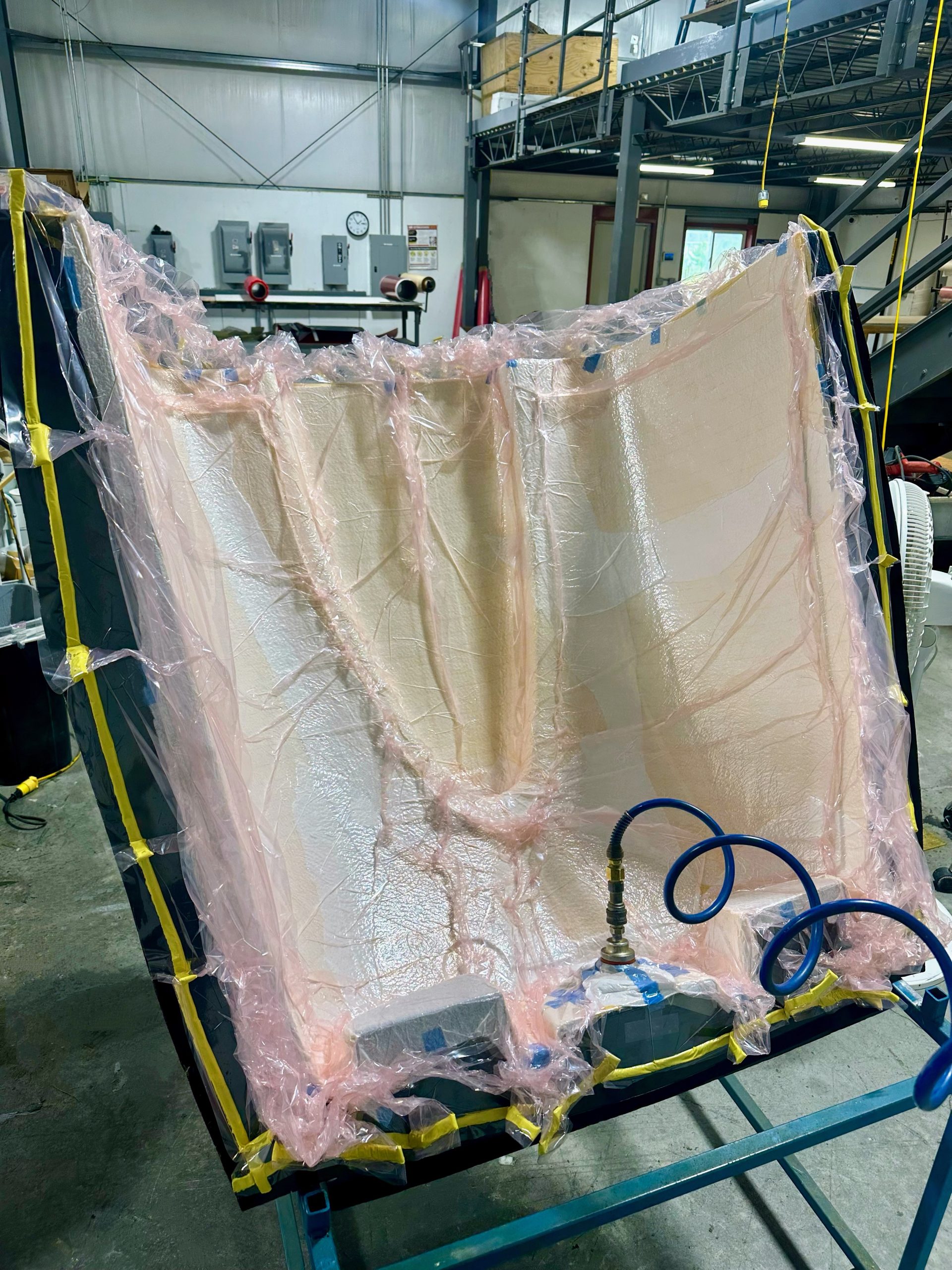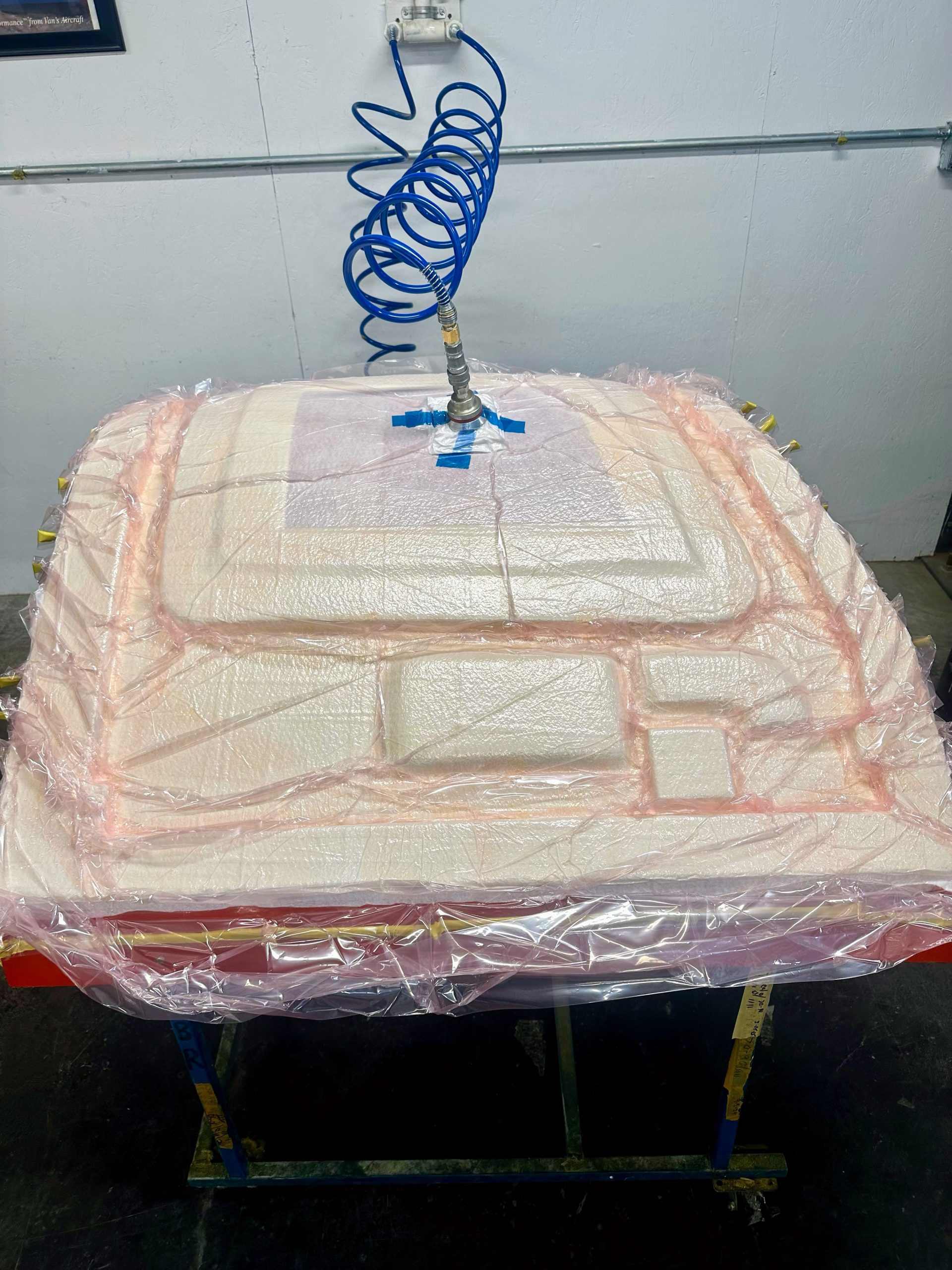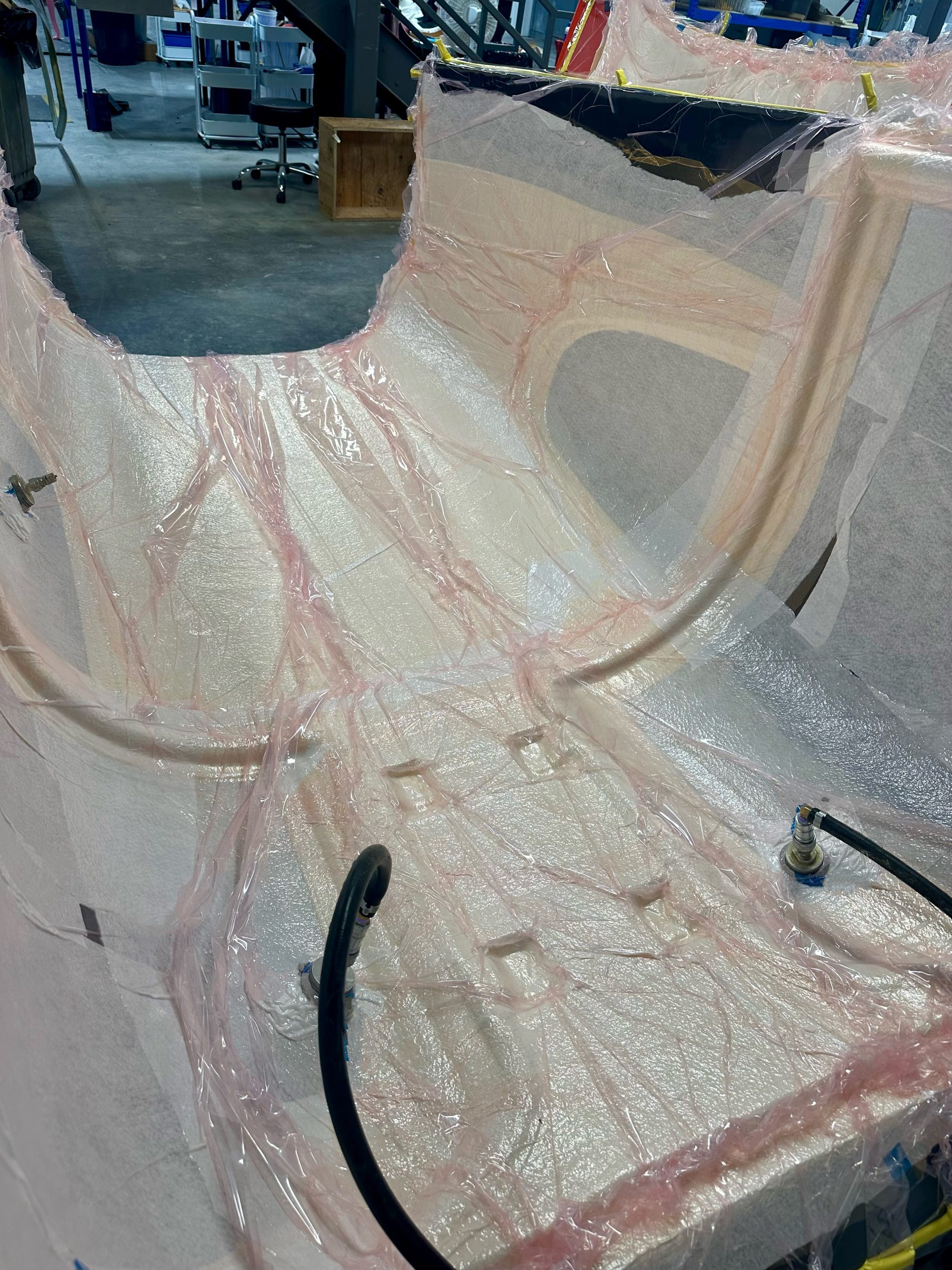
Stronger and Smoother Laminates with Vacuum Assisted Control
Vacuum bagging enhances resin flow and fiber consolidation, producing lightweight parts with reduced voids and improved structural performance.


Enhanced Composite Integrity with Controlled Vacuum Pressure
What Is It
How It’s Used
Benefits
Improved Mechanical Properties
Vacuum bagging significantly reduces void content in composite laminates by compacting the layers during curing. This enhanced compaction improves fiber wet-out and minimizes trapped air pockets, resulting in parts that are stronger and stiffer compared to traditional hand layup methods. The process ensures a more uniform resin distribution and improved bonding between layers, which translates to better structural integrity and performance in demanding applications. This mechanical enhancement is critical for parts subjected to high loads or stress, making vacuum bagging an essential method for high-quality composite manufacturing.
Dimensional Accuracy
Vacuum bagging supports complex part geometries and detailed molds by maintaining proper fiber placement and preventing distortion during curing. The uniform pressure applied ensures that the laminate conforms closely to the mold surface, preserving intricate shapes and tight tolerances. This method is especially useful for variable thickness parts or those with curves, recesses, and edges, where dimensional consistency is critical. By minimizing resin-rich areas and fiber displacement, vacuum bagging delivers parts that meet precise design specifications, improving assembly fit and reducing scrap rates in production.
Consistent Cure Control
The vacuum bagging process allows for even distribution of temperature and pressure across the entire laminate during curing. By maintaining a sealed environment, vacuum bagging promotes uniform heat transfer and resin flow, which prevents localized over- or under-curing. This consistency helps achieve the desired mechanical properties and reduces defects caused by uneven curing, such as delamination or internal stresses. The process is compatible with a wide range of resin systems and cure cycles, enabling precise control over part quality and repeatability for both small and large production runs.
Versatile Across Materials
Vacuum bagging is a versatile process compatible with a wide variety of reinforcement fibers including fiberglass, carbon fiber, aramid, and other specialty materials. It can be used effectively with different resin systems and layup configurations, making it suitable for diverse composite manufacturing needs. The technique adapts well to both wet layup and prepreg processes, supporting applications ranging from lightweight aerospace parts to durable marine components. This material versatility ensures that vacuum bagging can meet the performance, aesthetic, and production requirements of many industries without compromising quality or efficiency.
Excellent Surface Finish
Using vacuum bagging helps produce parts with superior surface finishes that are smooth, consistent, and free from common defects like resin pooling or dry spots. The controlled pressure applied during the bagging process presses the laminate firmly against the mold surface, ensuring that the resin cures evenly and the fiber layers conform precisely. This leads to fewer surface irregularities, reducing or eliminating the need for extensive post-processing. The result is a clean, uniform appearance that meets both aesthetic and functional requirements, ideal for visible components or parts requiring minimal finishing.
Enhanced Fiber Alignment
Vacuum bagging is highly effective when paired with prepreg materials to maintain controlled fiber orientation and resin content. The process helps prevent fiber shifting during layup and curing, preserving the intended alignment crucial for mechanical performance. By applying consistent pressure, vacuum bagging ensures that the prepreg layers bond uniformly without excess resin migration or dry spots. This control over fiber alignment contributes to predictable strength and stiffness characteristics in the finished part, making it an excellent choice for applications requiring optimized composite performance and repeatability.
Supports Core and Hybrid Structures
Vacuum bagging facilitates the clean integration of foam cores, inserts, or multi-material layups within composite parts. The controlled pressure and sealing environment help secure cores and dissimilar materials firmly in place while ensuring complete resin impregnation around these elements. This allows manufacturers to produce lightweight sandwich structures or complex hybrid components with superior bonding and minimal voids. The process supports innovative designs requiring different materials or thicknesses in one part, expanding the possibilities for performance optimization across aerospace, marine, automotive, and other demanding industries.
Why We Use It
Vacuum bagging helps M&W produce composite parts with better strength, consistency, and surface quality. Our technicians fine-tune each setup based on resin flow, laminate thickness, and mold complexity. By maintaining constant vacuum pressure, we achieve reliable results across a wide range of materials. This method allows us to meet the performance and visual expectations of industries that demand both precision and durability.
Photo Gallery